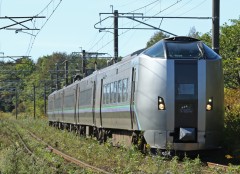
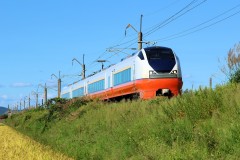
Shinkansen fares and ticket reservation methods from Sendai to Tokyo
Overview of travel methods from Sendai to Tokyo
From Sendai to Tokyo, the journey takes approximately 90 minutes by Tohoku Shinkansen. This provides extremely smooth, direct access from Sendai, the largest city in the Tohoku region, to Tokyo, Japan's capital. This article provides detailed information on Shinkansen fares, travel time, and ticket booking methods. We've also compiled helpful travel planning information, including rules for using the Japan Rail Pass (JR Pass) and hotel information around Tokyo Station.
Basic information about traveling from Sendai to Tokyo
- Minimum travel time: Approximately 90 minutes (when using the "Hayabusa")
- Unreserved seat fare: Approximately 10,890 yen
- Reserved seat fare: Approximately 11,410 yen
- Available trains: "Hayabusa", "Yamabiko", "Nasuno"
- Note: All seats on the "Hayabusa" are reserved; there are no unreserved seats.
- JR Pass: Available
Tokyo's appeal as a tourist destination
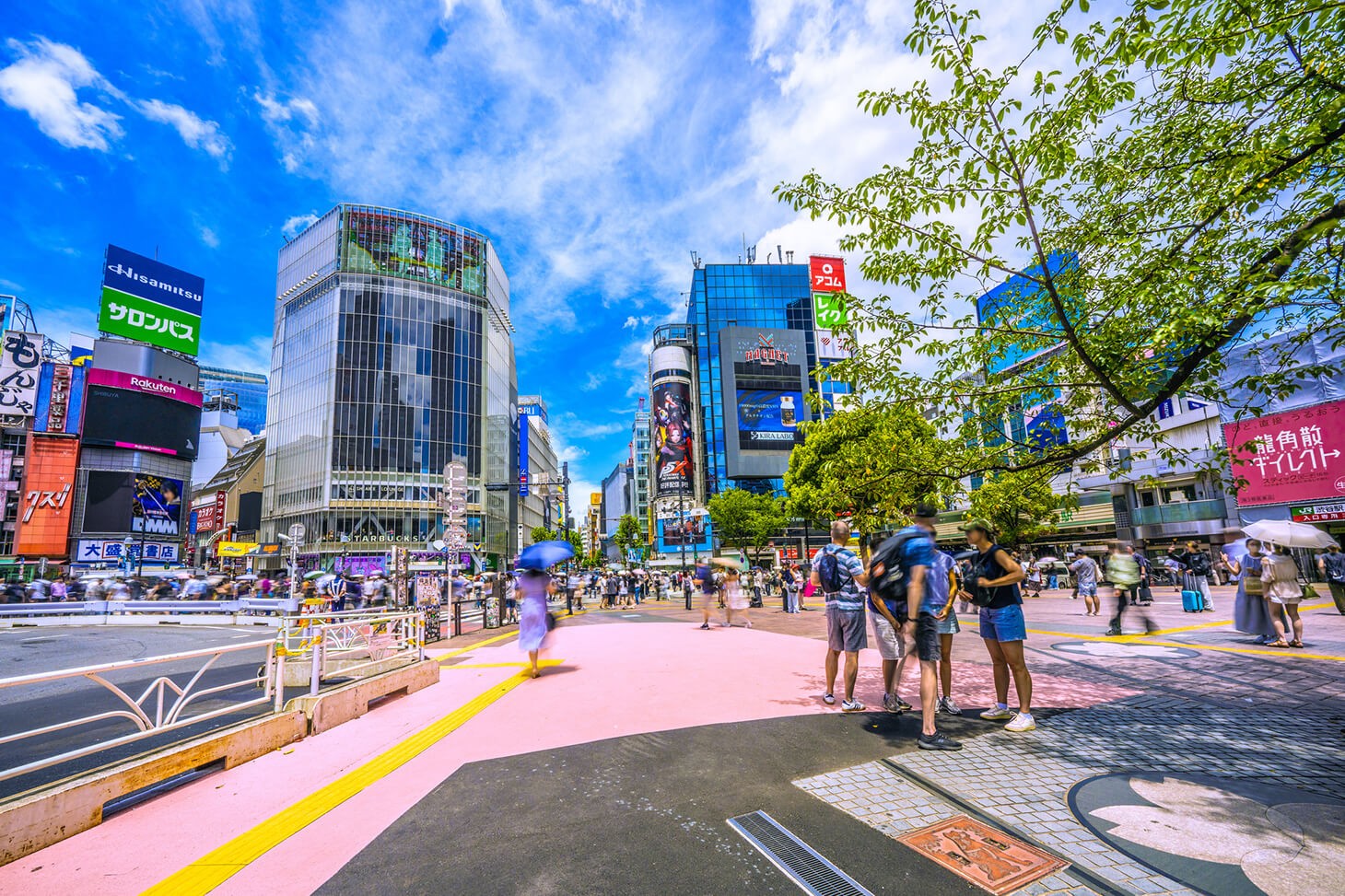
Tokyo is the capital of Japan and one of the world's leading metropolises. It boasts a diverse array of tourist attractions, each with its own unique character, such as Asakusa, Shinjuku, Shibuya, and Akihabara. With shopping, dining, and culture all in one place, you'll discover something new every time you visit. A popular travel plan involves enjoying history and cuisine in Sendai before heading to Tokyo for urban sightseeing.
 table of contents
Shinkansen fare from Sendai to Tokyo
Overall view of Shinkansen fares from Sendai to Tokyo
The Shinkansen fare from Sendai Station to Tokyo Station varies depending on the seat class and train type you choose. The Tohoku Shinkansen operates three types of trains: "Hayabusa", "Yamabiko", and "Nasuno". The fares are approximate, and during peak seasons (New Year's, Golden Week, and Obon), a peak season surcharge may be added to reserved seats and Green Car seats. By using the "Osaki Tokudane" early bird discount on Ekinet, you may be able to purchase tickets at a significantly lower price than the regular fare.
[Fare List] Fare comparison for unreserved seats, reserved seats, and Green Car seats.
| Seat | Fare (Estimate) | Features |
|---|---|---|
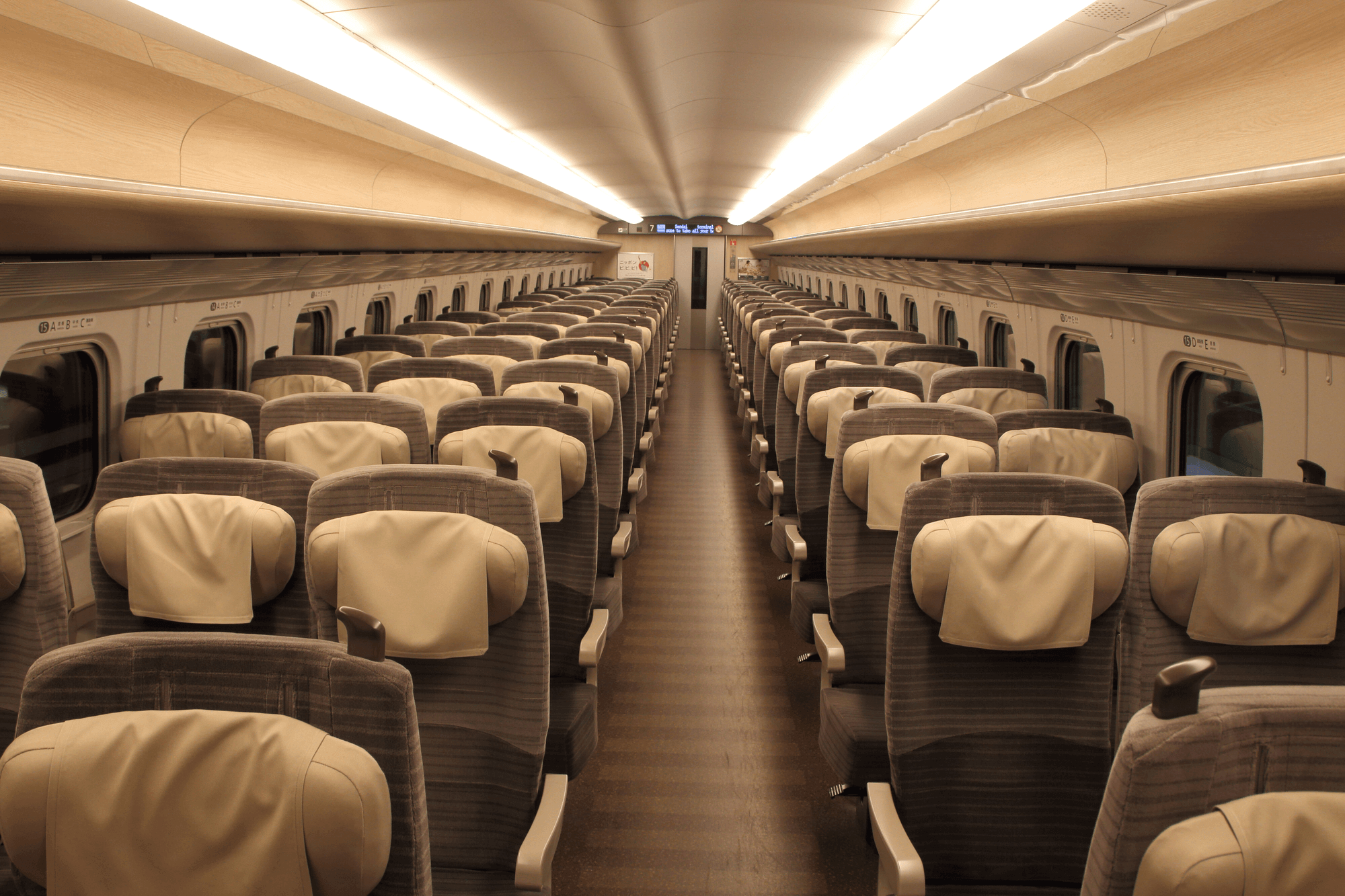
| Unreserved seat | Approximately 10,890 yen | No assigned seat numbers; passengers can sit wherever there is an empty seat (available only on "Yamabiko" and "Nasuno" trains). |
| Reserved seat (regular car) | Approximately 11,410 yen | A seat number is assigned, guaranteeing you a seat. |
| Green Car | Approximately 15,870 yen | Spacious seating and high-quality service, perfect for those who want to travel comfortably. |
Features and advantages of unreserved seating
Unreserved seats are the cheapest seating option. However, the "Hayabusa" does not have unreserved seats, so if you want to use unreserved seats, you will need to choose the "Yamabiko" or "Nasuno". The journey between Sendai and Tokyo takes approximately 90 to 130 minutes, so return journeys during peak seasons and on weekends may be crowded. It is recommended to line up on the platform early.
Features and usage scenarios of reserved seats
Reserved seats allow you to secure your seat number before boarding, so you can travel without worrying about crowds. Reserved seats are especially convenient for groups and families traveling together, as they guarantee adjacent seats. By booking online in advance using "Ekinet," you may be eligible for early bird discounts such as "Osaki Toku-da-ne," which can make tickets significantly cheaper than the regular fare. Reserved seats also provide peace of mind on the return journey from business trips, as you are guaranteed a seat.
Features and comfort of Green Cars
Green Cars are a premium class offering more spacious seats and enhanced amenities compared to standard class. The seats are arranged in a 2+2 configuration with a wide recline angle, designed to minimize fatigue during long journeys. The ample legroom makes it a comfortable space suitable for working on a laptop or reading. It's recommended for those who want to spend the approximately 90-minute journey between Sendai and Tokyo comfortably, as well as for business travelers and special trips.
Travel time from Sendai to Tokyo
Shortest Shinkansen travel time between Sendai and Tokyo
The shortest travel time from Sendai Station to Tokyo Station using the fastest train, the "Hayabusa", is approximately 90 minutes. The "Hayabusa" has very few stops, with only one stop at Omiya (on some services), and connects Sendai and Tokyo almost nonstop. If you use the "Yamabiko", there are more stops, so the travel time is approximately 100 to 130 minutes. The "Nasuno" also stops at stations in the southern part of the Tohoku Shinkansen line, such as Nasushiobara and Shin-Shirakawa, so it takes longer to travel from Sendai.
Average travel time and difference between trains
The "Hayabusa" takes an average of 90-100 minutes, making it a reliable train that connects Sendai and Tokyo in the fastest time. The "Yamabiko"'s travel time varies depending on the stations it stops at, but it generally takes about 100-130 minutes. The "Nasuno" has few trains that start or end in Sendai and mainly operates on the southern section of the Tohoku Shinkansen. If time is your priority, choose the "Hayabusa"; if cost is your main concern, choose the "Yamabiko".
The speed and features of the Tohoku Shinkansen
The Tohoku Shinkansen operates at a maximum speed of 320 km/h, making it one of the fastest bullet trains in Japan. The "Hayabusa" train travels at the highest speed of any bullet train in Japan, and its speed is among the highest in the world. After departing Sendai, the scenery of Miyagi, Fukushima, and Tochigi prefectures unfolds, and after passing Omiya, the landscape changes to that of the Kanto Plain. It also boasts a high rate of on-time performance, making it a reliable route for business trips.
Comparison of travel time with air travel
When flying from Sendai Airport to Tokyo (Haneda Airport), the flight time is about 1 hour, but when you include getting from Sendai city to Sendai Airport, check-in, security checks, boarding procedures, and travel from Haneda to central Tokyo, the total travel time is often 3 to 4 hours or more. With the Shinkansen (bullet train), you can travel directly from Sendai Station to Tokyo Station in as little as 90 minutes, making the Shinkansen overwhelmingly advantageous in terms of actual travel time between cities.
Time comparison with cars and express buses
By car, the journey via the Tohoku Expressway takes approximately 3 hours 30 minutes to 4 hours. Traffic congestion is common, and travel times can be significantly longer, especially on the last day of long weekends. While express buses are cheaper, the journey takes approximately 5 to 6 hours. In terms of punctuality, travel time, and comfort, the Shinkansen (bullet train) is the best mode of transportation between Sendai and Tokyo.
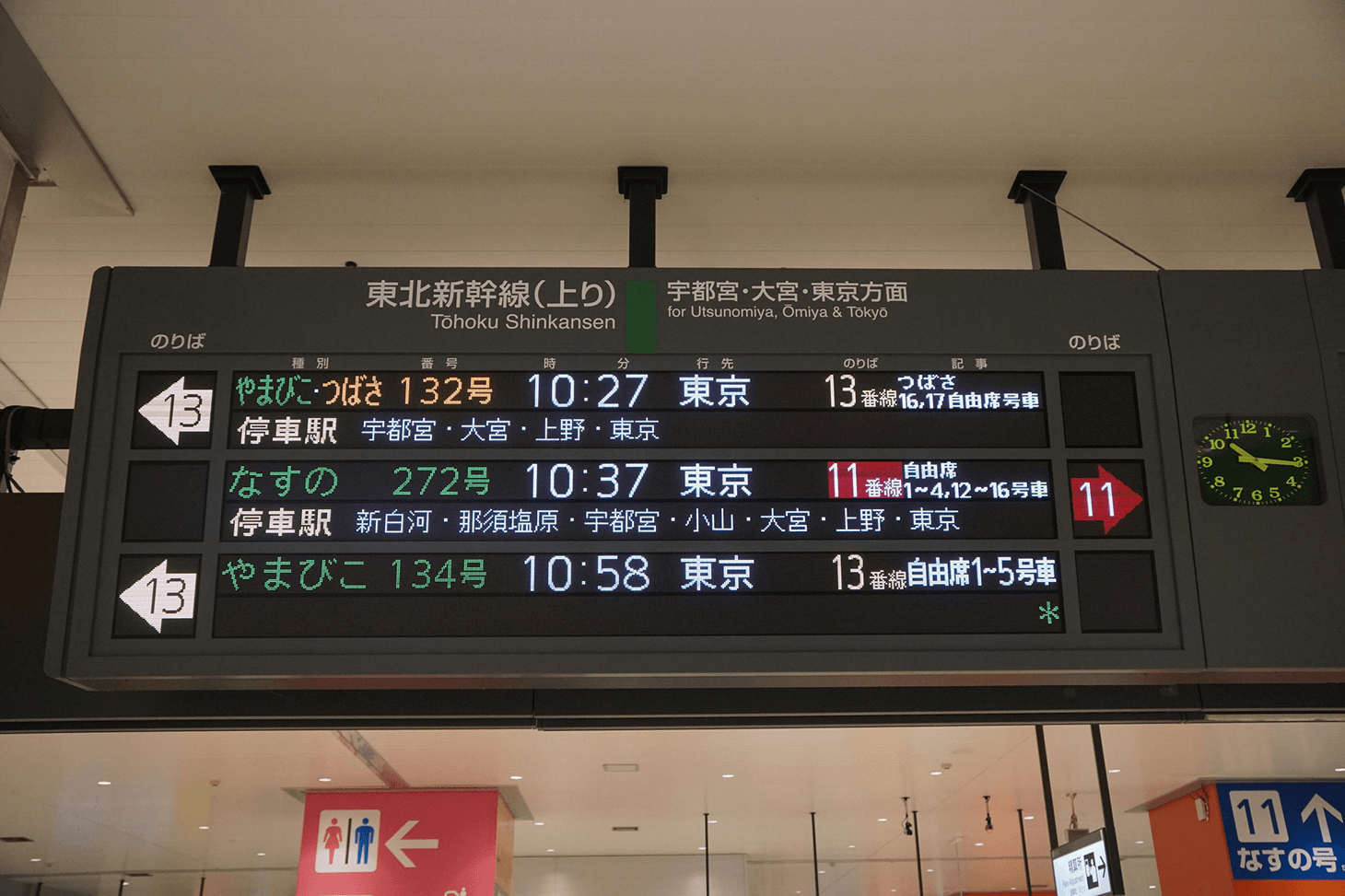
Which train is the fastest?
The difference between "Hayabusa", "Yamabiko", and "Nasuno"
The Tohoku Shinkansen (Sendai to Tokyo) operates three types of trains: "Hayabusa", "Yamabiko", and "Nasuno". The "Hayabusa" has the fewest stops and is the fastest train to reach Tokyo. The "Yamabiko" has more stops than the "Hayabusa" and is convenient for accessing various locations along the line. The "Nasuno" mainly operates on the southern section of the Tohoku Shinkansen (Tokyo to the Nasushiobara/Shin-Shirakawa area), and there are few trains that start or end in Sendai, so caution is advised when using it from Sendai.
Stations and characteristics of each train
The "Hayabusa" train stops only at major stations such as Sendai, Omiya, Ueno, and Tokyo (stopping stations vary depending on the train), and its greatest feature is its short travel time. All seats are reserved; there are no unreserved seats. The "Yamabiko" train stops at Sendai, Shiroishi-Zao, Fukushima, Koriyama, Utsunomiya, Omiya, Ueno, and Tokyo (stopping stations vary depending on the train), making it convenient for travel to various locations along the line. The "Nasuno" train mainly operates between Tokyo and Nasushiobara/Shin-Shirakawa, with only a limited number of trains running to Sendai.
[Train Comparison Chart] Comparison of Travel Times
| Train | Main Stops (Sendai to Tokyo) | Travel Time |
|---|---|---|
| "Hayabusa" | Sendai, Omiya, Ueno, Tokyo (depending on the service) | Approximately 90-100 minutes |
| "Yamabiko" | Sendai, Shiroishi-Zao, Fukushima, Koriyama, Utsunomiya, Omiya, Ueno, Tokyo (varies depending on the service) | Approximately 100-130 minutes |
| "Nasuno" | Flights to and from Sendai are limited. | Reference value: Approximately 120-140 minutes or more |
Recommended trains between Sendai and Tokyo
If time is your top priority, the "Hayabusa" is recommended. You can reach Tokyo Station in as little as 90 minutes, maximizing your time for sightseeing or work in Tokyo. However, since all seats on the "Hayabusa" are reserved, you must reserve your seat in advance. If cost is your main concern, the "Yamabiko"'s unreserved seats are an option, but the travel will take about 20 to 40 minutes longer. Check the timetable using a transportation information service such as Ekitan and choose the train that best suits your purpose and time.
Points to consider when choosing a train
When choosing a train between Sendai and Tokyo, first check if the "Hayabusa" train is running at your desired departure time. The "Hayabusa" runs approximately every 15-30 minutes even during the day, so you have plenty of options. If you are using a JR Pass, please note that a separate seat reservation ticket (for a fee) is required to ride the "Hayabusa". Securing your seat in advance using Ekinet will make your travel smoother.
How to book Shinkansen tickets
Basic methods for purchasing Shinkansen tickets
Shinkansen tickets between Sendai and Tokyo can be purchased in three ways: at ticket offices, ticket machines, and online. In all cases, tickets can be purchased or reserved up to one month before the travel date. During peak seasons, including the Tanabata Festival (early August), Golden Week, and the New Year holidays, reserved seats may sell out quickly, so it is recommended to book early once your travel dates are decided. Since the Tohoku Shinkansen is operated by JR East, the reservation service "Ekinet" is primarily used.

How to purchase at ticket offices
Shinkansen tickets can be purchased at the "Midori no Madoguchi" (manned ticket counters) at JR stations. Simply tell the staff your departure station, arrival station, date and time, number of passengers, and seat class to complete the process. Major stations such as Sendai Station and Tokyo Station also have English-speaking counters, so even those who are not confident in their Japanese can use the service with ease. Payment can be made with cash, credit cards, or transportation IC cards.
How to use a ticket vending machine
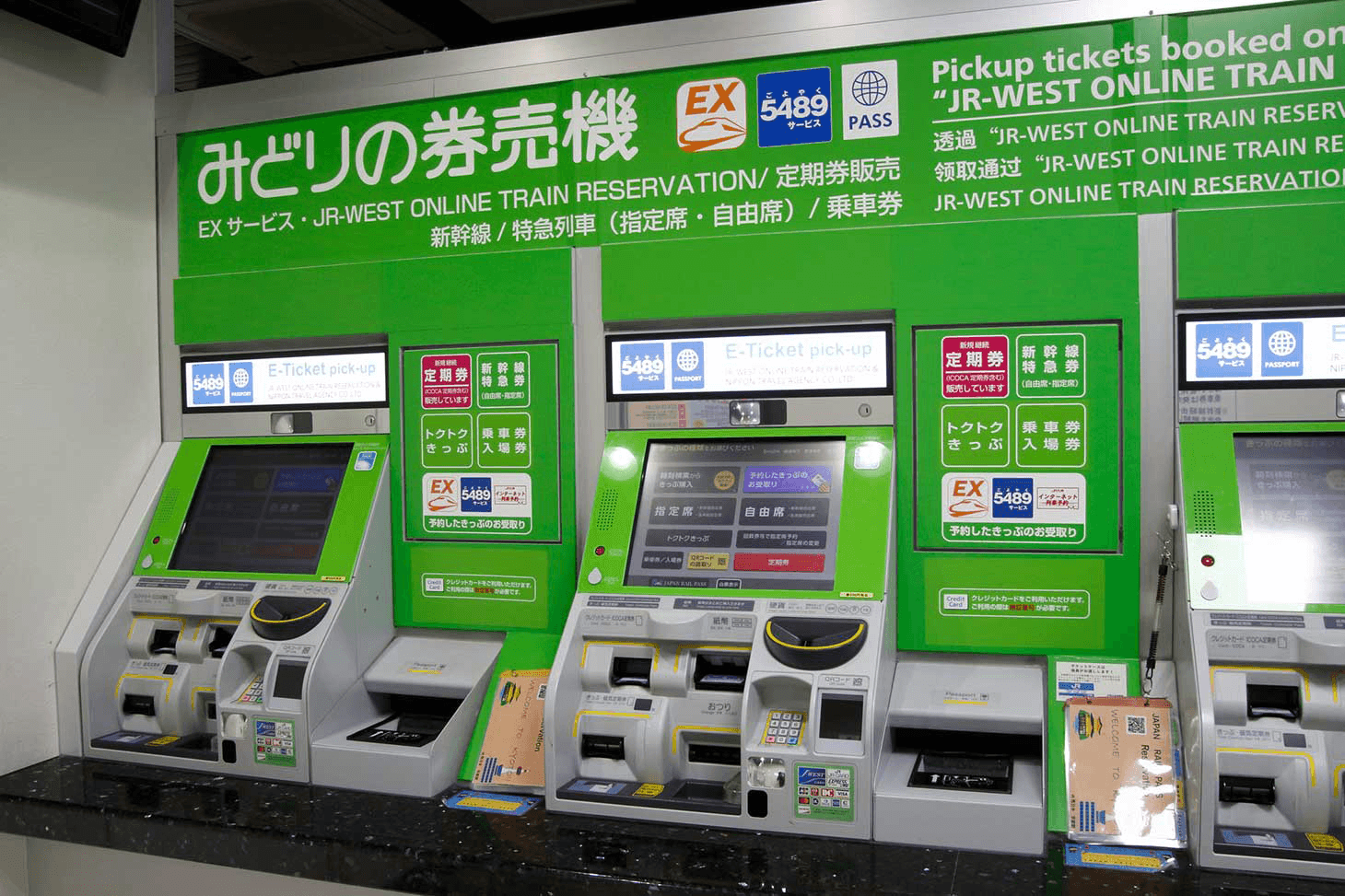
You can also purchase Shinkansen tickets at the "reserved seat ticket vending machines" installed at stations. Many of these machines now support multiple languages, including English, Chinese, and Korean, allowing you to purchase tickets simply by following the on-screen instructions. Since credit cards such as Visa, Mastercard, JCB, and American Express are accepted, you don't need cash. Using a ticket vending machine is a smoother option if the ticket offices are crowded.
Online reservations (Ekinet - official website)
For online reservations on the Tohoku Shinkansen, JR East's "Ekinet" service is convenient. Ekinet offers discounted tickets such as "Osaki Tokudane" and "Tokudane," which can be up to 50% off the regular fare. After registering as a member, you can easily make, change, and cancel reservations from your smartphone or computer. Using the "Shinkansen e-ticket" linked to Suica, you can pass through ticket gates using your transportation IC card without needing a physical ticket. Visitors from overseas can also utilize the JR East official website, which is available in English.
Points to note when making a reservation
Reservations for the Tohoku Shinkansen are primarily made through JR East's "Ekinet" online service, which is a separate service from the Tokaido Shinkansen's SmartEX and EX Reservation. Please be careful not to confuse them. Since there are no unreserved seats on the "Hayabusa", you must reserve a reserved seat or Green Car seat. Also, please remember that if you ride the "Hayabusa" with a JR Pass, you will need a separate seat reservation ticket (for a fee). During peak seasons, some trains may sell out immediately after tickets go on sale one month in advance.
Can I use the JR Pass between Sendai and Tokyo?
Overview of JR Pass
The JR Pass is a special ticket for travelers who do not reside in Japan, offering unlimited travel on JR lines. It comes in 7-day, 14-day, and 21-day versions, allowing unlimited travel on JR Shinkansen, limited express, and local trains without additional charges during the validity period. The Tohoku Shinkansen is also included in the JR Pass's coverage area, including the Sendai-Tokyo section. It can be purchased at travel agencies outside of Japan or at select ticket offices within Japan. A passport is required for use.
[JR Pass Eligibility Chart] Eligibility for use between Sendai and Tokyo
| Train | JR Pass Eligibility | Remarks |
|---|---|---|
| "Hayabusa" | Available under certain conditions | In addition to the JR Pass, a separate reserved seat ticket (for a fee) is required. |
| "Yamabiko" | Available | Both reserved and unreserved seats are available (reservations are required for reserved seats). |
| "Nasuno" | Available | Both reserved and unreserved seats are available (limited availability on flights to and from Sendai). |
Conditions for using "Hayabusa" (whether or not there are additional charges)
While the "Hayabusa" train can be used with the JR Pass, unlike regular reserved seat reservations, you will need to purchase a separate "reserved seat ticket" in addition to your JR Pass. The price of the reserved seat ticket varies depending on the section and seat class. Unlike the "Nozomi" train on the Tokaido Shinkansen, the JR Pass itself is not unusable; you can ride the "Hayabusa" by paying an additional fee. Please purchase your reserved seat ticket at a Midori-no-Madoguchi (ticket office) before boarding.
Terms of Use for "Yamabiko" and "Nasuno"
The "Yamabiko" and "Nasuno" trains can be used with a JR Pass at no additional cost. If you use an unreserved seat, you can board without any additional charge, but if you want a reserved seat, you need to reserve a seat in advance. Seat reservations can be made at no additional cost. The "Yamabiko" runs directly between Sendai and Tokyo, making it the most practical option for JR Pass users to ride without paying any additional fees.
Points to note when using JR Pass
Since the JR Pass is valid for consecutive days from the start date, it's important to carefully set the start date to match your travel schedule. If your travel plans involve traveling extensively throughout Tohoku, including not only between Sendai and Tokyo but also Matsushima, Hiraizumi, Morioka, and Aomori, you'll often get your money's worth from the JR Pass. Don't forget to check that an additional seat reservation ticket is required if you plan to ride the "Hayabusa" train.
Shinkansen Timetable from Sendai to Tokyo
Sendai-Tokyo Shinkansen service frequency
The Shinkansen between Sendai and Tokyo operates frequently throughout the day, mainly with the "Hayabusa" and "Yamabiko" trains. The "Hayabusa" runs approximately every 15 to 30 minutes even during the day, making it a convenient train with minimal waiting time. The "Yamabiko" also runs approximately every 30 to 60 minutes during the day. The Tohoku Shinkansen functions as a main line between Tokyo and Sendai, and the number of trains operating is very generous.
Guideline for the first and last trains
The first trains departing from Sendai Station leave as early as 6:00 AM, and the last trains bound for Tokyo depart around 10:00-11:00 PM. The final trains arrive at Tokyo Station around midnight. Taking the early morning train will get you to Tokyo Station around 8:00 AM, allowing you to start sightseeing or work in Tokyo in the morning. Using the late-night last train will allow you to travel to Tokyo on the same day, even after finishing your business in Sendai.
How to read a timetable
You can check the Shinkansen timetable between Sendai and Tokyo on JR East's official website, Ekinet, and other transportation information services. When searching, enter your departure station "Sendai," arrival station "Tokyo," travel date, and time to see a list of "Hayabusa" and "Yamabiko" train times and fares. Using the Ekinet app is very convenient as it allows you to search for times and make reservations all in one place.
[Timetable] Sendai Station ⇒ Tokyo Station (Excerpt/Approximate)
| Departure (Tokyo) | Train | Arrival (Atami) | Travel Time |
|---|---|---|---|
| 06:00 | "Kodama" No. 641 | 06:50 | Approximately 50 minutes |
| 06:30 | "Hikari" No. 491 | 07:05 | Approximately 35 minutes |
| 07:03 | "Kodama" No. 643 | 07:53 | Approximately 50 minutes |
| 08:03 | "Kodama" No. 645 | 08:53 | Approximately 50 minutes |
| 09:03 | "Kodama" No. 647 | 09:53 | Approximately 50 minutes |
| 10:30 | "Hikari" No. 495 | 11:05 | Approximately 35 minutes |
| 13:03 | "Kodama" No. 655 | 13:53 | Approximately 50 minutes |
| 20:03 | "Kodama" No. 671 | 20:53 | Approximately 50 minutes |
*Actual times and train numbers may change depending on the season and schedule revisions. Please check the latest information on Ekitan or other sites.
Peak hours and points to note
The Sendai-Tokyo route is particularly crowded during the Sendai Tanabata Festival (August 6-8), Golden Week, Obon, and the New Year's holiday period. Evening and night services to Tokyo on the last day of consecutive holidays tend to be especially crowded, so we recommend booking your reserved seat in advance. All seats on the "Hayabusa" are reserved, so be sure to secure your seat before boarding. Popular services often sell out immediately after tickets go on sale one month in advance, so it's important to book as soon as your travel plans are finalized.
Summary: Shinkansen from Sendai to Tokyo
The Tohoku Shinkansen is the fastest and most convenient way to travel from Sendai to Tokyo. The approximate fares are ¥10,890 for unreserved seats, ¥11,410 for reserved seats, and ¥15,870 for Green Car seats. The fastest "Hayabusa" train takes about 90 minutes, making it a comfortable distance for a day trip from Sendai to Tokyo. Compared to airplanes, cars, and highway buses, the Shinkansen is the best mode of transport in terms of travel time, punctuality, and comfort. Since all seats on the "Hayabusa" are reserved, you must secure your seat before boarding. Also, please note that if you are using a JR Pass to ride the "Hayabusa", you will need a separate seat reservation ticket (for a fee). If you want to use your JR Pass without additional charges, choose the "Yamabiko" train. Tickets can be purchased at ticket offices ("Midori no Madoguchi"), reserved seat ticket machines, or online (e.g., Ekinet). Taking advantage of Ekinet's early bird discounts can sometimes result in significantly lower fares than the regular price. During the Sendai Tanabata Festival and on the last day of long weekends, return services tend to be particularly crowded, so we recommend booking as soon as your travel plans are finalized. Enjoy a comfortable Shinkansen ride between Sendai and Tokyo, while still savoring the memories of beef tongue, zunda, and Matsushima.

The information on this website is based on content available at the time of publication. We do not guarantee its accuracy or timeliness. The content may include advertisements or promotions, and we are not responsible for any external websites linked from this site.